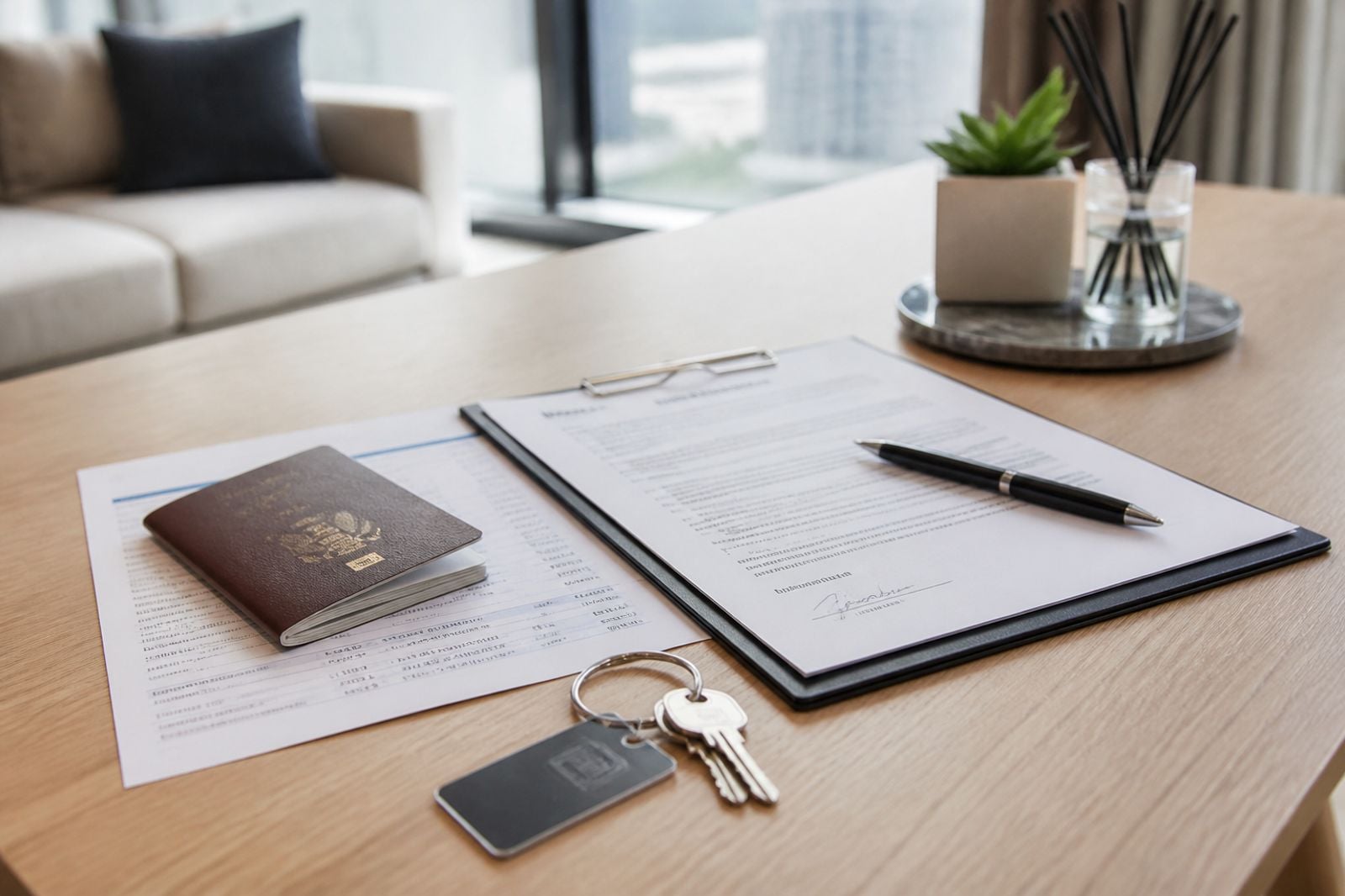
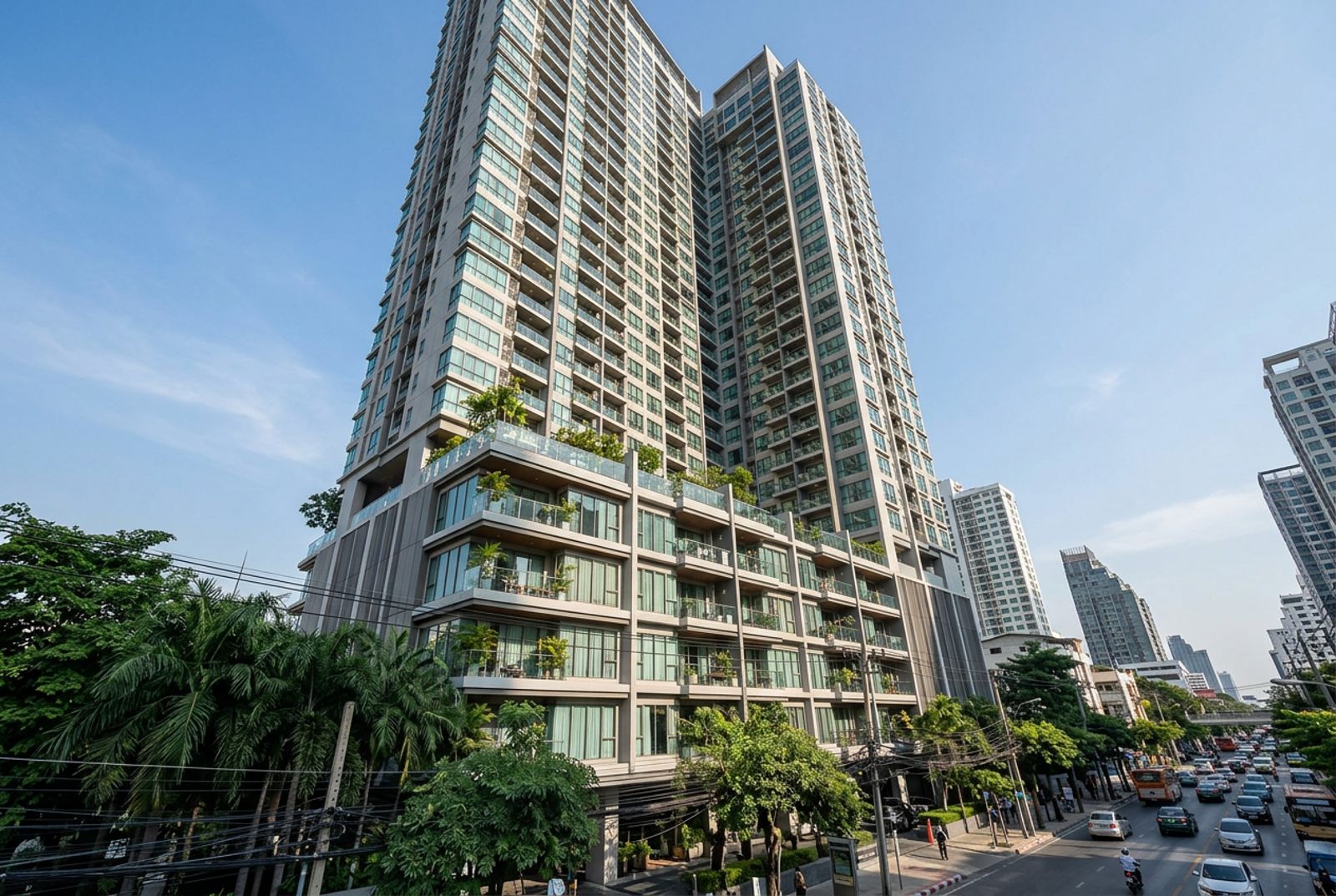
Can Foreigners Buy a Condo in Thailand and How the 49% Quota Works



In Short
Advice
Key Highlights
- Can foreigners buy a condo in Thailand? Yes, provided two conditions are met at the same time. First, you personally qualify under Section 19 of the Condominium Act B.E. 2522. Second, the building still has foreign quota available.
- The 49% foreign quota is measured by the combined floor area of all units in the building, not by unit count. A project can have plenty of units left for sale while its foreign quota is already full.
- Most foreign buyers qualify by bringing foreign currency into Thailand and converting it to baht here. Inward transfers of USD 50,000 or more are documented on a Foreign Exchange Transaction Form, still widely called the FET.
- Foreign buyers pay the standard 2% transfer fee on the appraised value. The reduced 0.01% rate runs only until 30 June 2570 (2027) and is limited to Thai nationals buying as individuals, so it does not apply to you.
- In 2568 (2025) foreigners took transfer of 14,899 condo units worth 60,921 million baht, which was 14.7% of all units and 25% of all value transferred nationwide, according to the Real Estate Information Center.
Can foreigners buy a condo, and what do people get wrong?
Yes. A registered condominium unit is the one form of Thai residential property a foreigner can hold freehold, in their own name, without setting up a company or relying on somebody else to hold it for them. The Condominium Act B.E. 2522 built that route in deliberately, but tied it to two conditions that both have to hold. One sits with you as the buyer. The other sits with the building.
The most common misreading is that having the money settles it. In practice, deals that collapse on transfer day rarely collapse over funds. They collapse because the building's foreign quota turned out to be full, or because the money arrived in a form the Land Office will not accept as proof. Both are checkable weeks in advance, and both should be checked before you pay a deposit rather than after.
There is also a persistent belief that buying a condo gives you a share of the land title in the ordinary sense. What you actually hold is freehold title to your unit plus a proportionate co-ownership interest in the common property, including the land, as stated on your unit title deed. That distinction matters for how quota is calculated and how common fees are apportioned. PropertyScout explains the fundamentals in its guide to property ownership for foreigners.
Which foreigners can hold title to a unit under Section 19?
Section 19 of the Condominium Act B.E. 2522, as amended, sets out five categories of foreigners and foreign juristic persons who may hold title to a unit. You need to fall into one of them, not all five.
| Eligible category | Legal basis |
|---|---|
| Foreigner with residence permission | Permitted to have residence in the Kingdom under the immigration law, in other words a holder of a permanent residence certificate |
| Foreigner under investment promotion | Permitted to enter the Kingdom under the investment promotion law, typically through a Board of Investment approval |
| Juristic person under the Land Code | Described in Sections 97 and 98 of the Land Code and registered as a juristic person under Thai law |
| Foreign juristic person with a licence | Treated as foreign under the Foreign Business Act and holding a foreign business licence |
| Foreigner or foreign juristic person bringing in funds | Brings foreign currency into Thailand, or withdraws from a non-resident baht account, or withdraws from a foreign currency deposit account |
The fifth category is the route almost every private buyer uses
Most buyers are not permanent residents and did not arrive through investment promotion, so they qualify under the fifth category by bringing money in. The point worth internalising is that this category attaches to the source of the funds, not to your visa or how long you have lived here. Somebody on a tourist entry can complete a purchase if the money is routed correctly. Somebody who has lived in Bangkok for a decade and pays with baht earned locally will hit a wall at the documentation stage. For a long-term expat that often means planning a transfer from a home-country account well before choosing a unit.
Inheritance and unqualified owners must dispose of the unit within one year
If a foreigner acquires a unit by inheritance as a statutory heir or legatee but does not personally qualify under Section 19, the law requires them to dispose of that unit within one year of acquiring it. Families buying in Thailand rarely plan for this in advance. It is worth raising with a Thai lawyer at the time of purchase, alongside a will, rather than leaving it to the people who inherit.
How does the 49% foreign quota work and what counts toward it?
The 49% foreign quota is a ceiling applied per building. Ownership held by foreigners and by juristic persons treated as foreign, added together, must not exceed 49% of the total floor area of all units in that building. The remaining 51% has to sit with owners who are not treated as foreign.
It is measured in square metres, not in number of units
This changes real outcomes more than most buyers expect. Because the ceiling is calculated on area, one large unit consumes as much quota as several studios combined. A project that sold its big units to foreign buyers early will exhaust quota faster than one that sold small units. Common areas are excluded from the calculation because the base is saleable unit area only, while parking bays issued under a separate title do count toward the foreign share.
The practical consequence is that units available and foreign quota available are two different questions. A building can have thirty units on the market and no quota left. This happens regularly in Sukhumvit and other areas with heavy foreign demand, so it is worth having a second and third building on your shortlist. You can see current stock in that corridor on the Sukhumvit condos for sale page and read the dedicated explainer on the quota rule.
How to verify remaining quota before you pay a deposit
- Ask the condominium juristic person's office for written confirmation of the current foreign ownership ratio, dated. A verbal assurance from a sales agent is not evidence.
- Have your lawyer or consultant run a title search at the Land Office for the district where the building sits. This comes straight from the register and you can rely on it later.
- If you are buying from a developer, get written confirmation that this specific unit will be allocated within the foreign quota, and what happens if it cannot be.
- Put a condition in the sale and purchase agreement stating that if title cannot be registered in your name as a foreign buyer, your deposit is refunded in full. This single clause is the most useful protection in the whole transaction.
If quota is full and you proceed anyway, the outcome is that title cannot be registered in your name on transfer day. It is not a delay that resolves itself. That is why verification is not a step you can compress to save time.
How must you remit funds from abroad for the transfer to complete?
For buyers qualifying under the fifth category, the Land Office wants evidence that the purchase money genuinely came from abroad and was converted to baht in Thailand. That evidence is the heart of the transaction, and it is the part you control from day one.
The FET form and what happens below the threshold
For transactions of USD 50,000 or more, or the equivalent in another currency, the receiving bank in Thailand issues a Foreign Exchange Transaction Form. This is the document the market calls the FET, and it was previously known as the Thor Tor 3. Below that threshold, the bank issues a credit advice or confirmation letter instead, which the Land Office accepts in the same way. If you remit in several tranches, keep the paperwork for every one of them and make sure the total is not less than the purchase price.
The supporting set the Land Office asks for alongside it is your passport with the relevant entry or visa page, the sale and purchase agreement, and the juristic person's letter confirming the foreign ownership ratio. PropertyScout has a field guide to the FET form, box by box.
Four mistakes that stop a transfer on the day
- Sending baht from abroad instead of sending foreign currency and converting it in Thailand. The bank cannot issue exchange evidence for money that arrived already converted.
- Leaving the purpose field blank. State it plainly, for example purchase of condominium unit 12A at the named project, so the bank can reproduce it on the form.
- A mismatch between the account holder receiving the funds and the person who will hold title. Money landing in a spouse's or company account while title is registered to an individual creates a gap the Land Office will notice.
- Cutting the timing too fine. Banks need working days to issue the paperwork, so allow one to two weeks between the money landing and the transfer appointment.
Opening a Thai bank account before you start looking makes all four of these easier to manage, and it is the step most first-time foreign buyers leave until it is inconvenient.
Foreign ownership across condos, houses and land compared
Questions about condos usually arrive attached to questions about houses, land and villas in Phuket or Samui. Here is the shape of it.
| Asset or right | What a foreigner can do | Conditions and limits |
|---|---|---|
| Unit in a registered condominium | Hold freehold title in your own name | Inside the 49% quota for that building, and only if you qualify under Section 19 |
| Land | Cannot be held in a foreign individual's name under the Land Code | Apart from narrow exceptions that specific legislation provides for |
| Building such as a house | Own the building separately from the land it stands on | Needs a separate lease over the land. More complex than a condo and needs a lawyer before you commit |
| Lease of immovable property | Take a lease under the Civil and Commercial Code | Capped at 30 years, and any lease longer than three years must be registered at the Land Office to be enforceable for its full term |
| Usufruct and habitation rights | Register the right on the title deed as an alternative in some family situations | Within the periods the law allows |
| Leasehold right under the Sap Ing Sith Act B.E. 2562 (2019), Thailand's leasehold right law | Hold near-ownership rights, and transfer them or use them as loan security | Up to 30 years |
Weighed against each other, a condominium unit remains the shortest and cleanest path for a foreign buyer who wants title in their own name. You can see nationwide stock on the condos for sale page.
What should you do when the foreign quota is full?
Options that work within the law
- Move to another building in the same area that still has quota. Simplest option, and it adds no legal risk at all.
- Take a registered lease of up to 30 years over the unit, recorded on the title deed. Many developers offer this for units outside the quota.
- Have a Thai spouse hold title within the Thai portion, understanding clearly that title sits with the registered holder and not with you, and documenting the arrangement properly.
- Hold through a juristic person that genuinely operates a business, or use rights obtained through investment promotion. This needs a real commercial rationale behind it.
- Wait for quota to free up when an existing foreign owner sells. This happens periodically in buildings with high turnover.
Nominee structures carry markedly higher risk in 2026
Setting up a Thai company with Thai shareholders who have not genuinely invested, purely so the company can hold property for a foreigner, is an approach some buyers have used and one whose risk profile has changed sharply. The Department of Business Development issued Order 2/2568, effective 1 January 2026, requiring proof of the source of investment funds for all new company registrations, followed by Order 1/2569, effective 1 April 2026, extending that scrutiny to amendment filings. In late April 2026 the Department of Lands and the Department of Business Development agreed a framework allowing shareholder data to be cross-checked against land title registries, as reported by Global Law Experts in 2026.
The consequences are not limited to a fine. The Foreign Business Act provides penalties for both the foreigner and the Thai person lending their name, and outcomes can extend to compulsory disposal of the asset within a set period. Set against that, buying a unit that sits inside a building's available foreign quota is a substantially lower-risk route. It is the reason this article puts quota verification before the deposit rather than treating it as a problem to work around afterwards.
The buying process and costs from choosing a unit to transfer day
Seven steps in the order they actually happen
- Step one. Shortlist areas and buildings, and ask for each building's foreign ownership ratio before you even book a viewing.
- Step two. View the unit and inspect it, and ask to see the unit title deed and the last twelve months of common fee receipts.
- Step three. Verify quota formally through the juristic person or a Land Office title search, and keep the confirmation in writing.
- Step four. Sign the sale and purchase agreement and pay the deposit, with the refund condition covering failure to register foreign title.
- Step five. Remit funds in foreign currency into a Thai account held by the person who will take title, stating the purpose clearly.
- Step six. Collect the Foreign Exchange Transaction Form or bank confirmation from the receiving bank, and assemble your personal documents.
- Step seven. Attend the Land Office on the agreed transfer date, settle the fees and taxes as apportioned in the contract, and receive the unit title deed.
Transfer day costs and why the reduced fee does not apply to you
The standard registration fee on transfer of ownership is 2% of the appraised value. In practice buyer and seller often split it evenly, or one side absorbs it, which is why the split belongs in the contract rather than in a conversation. Mortgage registration, where financing is involved, is 1% of the loan amount. There are also seller-side taxes and duties whose rates depend on how long the seller has held the unit and whether they are an individual or a company, so ask the seller for an estimate before the transfer date.
Here is the part foreign buyers need on the record. The measure reducing transfer and mortgage registration fees to 0.01%, extended by cabinet to 30 June 2570 (2027) for homes priced up to 7 million baht, requires the buyer to be a natural person of Thai nationality. Foreign buyers therefore pay the standard rates, not the reduced ones. On a 7 million baht unit that difference is material, and it belongs in your budget from the first conversation, not as a surprise at the Land Office.
The line items buyers most often forget are the one-off sinking fund contribution collected on handover in new projects, advance common area fees set by the building regulations, water and electricity meter deposits, and your lawyer's or consultant's fee for document review. None of these rivals the transfer fee, but together they change how much cash you need on the day.
What does 2568 transfer data say about foreign demand?
Figures from the Real Estate Information Center for 2568 (2025) show the 49% quota is not a theoretical constraint. It is used heavily every year, which is precisely why individual buildings run out.
| Measure | Figure for 2568 (2025) |
|---|---|
| Units taken by foreign buyers over the year | 14,899 units, up 2.2% on the prior year |
| Total transfer value | 60,921 million baht, down 10.7%, meaning unit numbers rose while average value per unit fell |
| Share of all condo transfers nationwide | 14.7% of units and 25% of transfer value |
| China, ranked first | 4,940 units, down 12.9% |
| Myanmar | 1,968 units, up 41.8% |
| Russia | 1,172 units |
| Taiwan | 1,036 units |
| United States | 537 units |
Two things follow from this. Foreign demand is spreading across more nationalities than it did a few years ago, and falling value per unit suggests buyers are moving toward mid-priced stock. If you are shopping in that band in a foreigner-favoured area, quota pressure on the buildings you like is higher than it was, so shortlist more than one. Current Bangkok stock is on the Bangkok condos for sale page.
Frequently asked questions about buying a condo in Thailand as a foreigner
How many condos can one foreigner own in Thailand
There is no cap per person. The limit sits at building level, where combined foreign ownership cannot exceed 49% of total unit floor area. One buyer can own several units across several buildings, as long as each unit fits inside its own building's quota and each purchase has its own complete inward remittance evidence.
Do I need a visa or residence permit first
No, not if you qualify by bringing foreign currency into Thailand, because that category depends on where the money came from rather than on your immigration status or length of stay. That said, having a Thai bank account makes receiving funds and obtaining bank documentation considerably easier, so it is worth arranging before you pay a deposit.
Can foreigners get a mortgage in Thailand to buy a condo
Some lenders extend financing to foreign buyers under specific conditions, such as an employment history in Thailand or a Thai spouse, but the range of options is clearly narrower than for Thai buyers and terms differ between institutions. One planning point matters. If part of the price comes from a Thai loan, structure the remittance evidence so it still covers what the law requires. PropertyScout covers this in more depth in its guide to loans for foreigners in Thailand.
Can I buy inside the Thai quota now and switch the title to my name later
Transferring from the Thai portion to a foreign name is only possible if the building still has foreign quota available on the day of registration, and the incoming owner qualifies and holds full remittance evidence. Buying now and converting later therefore carries real uncertainty, because quota can be taken up before that day arrives.
If I sell, can I take the proceeds out of Thailand
Repatriating sale proceeds is possible under the exchange control rules banks apply, and the bank will want to see how the money came in originally, which is the same Foreign Exchange Transaction paperwork. Keep that documentation for the whole time you own the unit rather than filing it away after transfer day.
Are the 75% quota and the 99-year lease in force yet
No. Both remain policy proposals. On 21 June 2567 (2024) the cabinet directed the relevant ministries to study extending land leases from 30 to 99 years and raising foreign condominium ownership from 49% to 75%, as reported by the Real Estate Information Center, but neither has been approved or brought into force as at the date of this article. The limits that apply in practice are still 49% and 30 years. Plan on the rules that exist rather than on the ones being discussed.
Summary
Can foreigners buy a condo in Thailand? Yes, and it is the most direct route available to a foreign buyer who wants title in their own name. What decides whether the purchase completes cleanly is not the price of the unit. It is two things you can check in advance, namely whether you qualify under Section 19 and how much foreign quota the building has left. Settle both before the deposit and the rest becomes paperwork in sequence.
PropertyScout consultants are trained in-house and work in English, Thai, Chinese, German, French and other languages, so they can request the quota confirmation letter from the juristic person, coordinate documentation with your bank, and attend the Land Office alongside you. The service carries zero commission for buyers and tenants.
Start with the areas that fit your life, then have the team verify quota on the buildings you shortlist before you commit to any of them. Browse verified listings and work with an agent who speaks your language.
Disclaimer. Prices and property availability change and nothing here is guaranteed. Property information is general guidance only. This content is not legal, tax or financial advice. Each building's foreign ownership ratio and the fees actually charged must be confirmed with the condominium juristic person, the Land Office and a qualified Thai lawyer before you decide.
Primary sources used in this article include the Condominium Act B.E. 2522 and its amendments, the Land Code, the Civil and Commercial Code, the Sap Ing Sith Act B.E. 2562, foreign condominium transfer data for 2568 (2025) from the Real Estate Information Center, the cabinet resolution extending the reduced transfer and mortgage registration fees to 30 June 2570 (2027), and 2026 reporting on nominee enforcement from Global Law Experts.
FAQs
Lorem ipsum dolor sit amet, consectetur adipiscing elit. Suspendisse varius enim in eros elementum tristique.

Explore More Topics
Free real estate resources and tips on how to capitalise