Pet-Friendly Condos in Bangkok, the Buildings That Really Allow Them and on What Terms


In Short
Advice
Key Highlights
- That makes this a genuinely narrow market, about 2.6 percent of all condo rental listings in Bangkok and about 2.8 percent of all sale listings
- Supply is heavily concentrated. Watthana district alone holds the largest share of the city total by a wide margin, while Sathon sits at the thin end of the range
- The rent premium attached to a pet clause widens with unit size, from about 25 percent on a one-bedroom to about 83 percent on a two-bedroom in Sukhumvit
- A building's own bylaws can be stricter than the city ordinance and are what actually governs your daily life, so always ask for the pet section in writing before you pay anything
Why are pet-friendly condos harder to find than expected?
Most people arriving in Bangkok with a dog or a cat treat the pet requirement as one more filter on top of budget and location. The numbers say something different. Only about 2.6 percent of the condos listed for rent across Bangkok are marked as pet-friendly. On the sale side the picture is similar, at roughly 2.8 percent. Both figures come from the PropertyScout platform and they move daily.
In practical terms you are not choosing from 82,000 homes with a preference attached. You are choosing from around 2,000, and that pool then narrows again through weight caps, headcount limits and species rules that differ from building to building. This guide follows the order those decisions actually arrive in. First how to search, then how to read the conditions, then how to pick a unit that works for the animal you already have.
How do you find a pet-friendly condo that fits your animal?
Filter by species, weight and headcount before you filter by budget
The order matters more than it looks. Most people start with budget and area, fall for a unit, and only then discover the building will not take a 14 kilogram dog. The conditions that decide whether you can live somewhere at all are species, adult weight and number of animals. Price is not one of them.
Answer three questions before you open any listing site. Is your animal a dog or a cat, what will it weigh at full adult size, and how many do you have. Those three answers remove more than half the market before you start, and they make the message you send to a building's management office specific from the first contact rather than the third.
Then filter by area and decide between renting and buying
Once the animal constraints are fixed, the location and transaction filters do useful work. On PropertyScout the rental side sits on the pet-friendly condos for rent in Bangkok page and the sale side on the pet-friendly condos for sale in Bangkok page. Both let you narrow further by bedroom count, price band and district without leaving the page.
If you are still weighing renting against buying, the difference that matters here is not the money. Renting keeps you mobile if a building tightens its rules. Buying makes you a co-owner with a vote at the general meeting, which is the only forum where pet bylaws are actually changed.
Pet-friendly permission falls into three tiers, not two
The phrase pet-friendly on a listing does not mean the same thing in every building. Drawing on the conditions we see most often across the platform and on external roundups of Bangkok buildings, real permission sorts into three tiers. Use these as the questions you put to a management office rather than as assumptions about a specific building.
Tier one, fully permitted
- Takes both dogs and cats, with no general breed exclusion
- Weight ceilings are relaxed compared with the market, or handled case by case
- Often comes with supporting facilities such as a walking area or a pet washing point
- The rarest of the three tiers, and usually found in projects positioned for pet owners from the design stage
Tier two, cats or small dogs only
- Cats are accepted, dogs only within a small-size definition
- Some buildings name accepted and excluded breeds directly in the bylaws
- This is the most common tier across Bangkok
- The usual mistake is judging by the size of a puppy rather than the adult weight the building will eventually measure
Tier three, permitted with weight and headcount conditions
- A stated weight ceiling per animal. A roundup of Bangkok buildings published 21 April 2026 reports many buildings setting that ceiling at 10 kilograms, while conditions we recorded earlier show a 15 to 20 kilogram band as well
- A cap on animals per unit, usually tracking the city ordinance ceiling
- A pet deposit charged on top of the standard security deposit
- Two sources give different weight ceilings, so ask the specific building rather than relying on a market midpoint
The disagreement between sources is worth noting rather than smoothing over. It reflects the fact that Bangkok has no market standard for this, so the only ceiling that governs you is the one written into the bylaws of the building you are looking at.
Which pet-friendly units are available right now?
This block shows live available units with per-building condition tags. The web team renders it here from the platform, tied to the pet-friendly filter on both the rental and the sale hub pages.
When you look at the list, open at least three units across three different buildings and send the same set of questions to all three management offices. That question set is in the next section. Asking the same thing three times is what makes the answers comparable, which photographs never are.
What do you need to check before you sign?
Does the pet have to be registered with the juristic person
There are two separate registrations and they are often confused. The first is with the authorities under the Bangkok Metropolitan Administration ordinance on the keeping and release of animals, which requires dogs and cats to be microchipped and registered within 120 days of birth, or within 30 days of being brought into Bangkok. The second is with the juristic person office of your own building, which many buildings require as well. Completing one does not satisfy the other.
The commencement date is currently reported inconsistently. Most sources, including PropertyScout's own coverage, give 10 January 2026, with a grace window of 90 days, to 9 April 2026, for owners already keeping more animals than the new ceiling allows. One source updated on 25 November 2025 states the date was pushed back a year to 10 January 2027. Where sources disagree like this, the safe move is to call the district office covering your building before you act.
On penalties, PropertyScout's own coverage states that non-compliance carries fines of up to THB 25,000. That figure still needs to be confirmed against the text of the ordinance before anyone relies on it for a decision.
Extra deposits and the rules on using the lift
Many buildings that allow pets charge a pet deposit on top of the standard security deposit. The Bangkok building roundup published on 21 April 2026 reports a range of roughly THB 5,000 to THB 20,000 depending on the building and the size of the animal. This is the sum that people budgeting a move-in most often forget, so get the real number before you place a booking deposit.
The rule that gets asked about least and affects daily life most is the lift. Many buildings require animals to be carried or bagged anywhere in the common areas. Some designate which lift may be used, or at which hours. If you live on a high floor and your dog weighs 9 kilograms, that rule is something you will meet two or three times a day for the length of your lease.
Four questions to put to the management office before signing. Send the same four to every building so the answers line up.
- What is the weight ceiling per animal and the cap per unit, stated as numbers
- How much is the pet deposit, and under what conditions is it returned and when
- Which common areas accept animals and which do not, including the lift rules
- When were the current bylaws last amended, and is there a pet item pending at the next general meeting
Always ask to see the bylaws in writing
This is the single most important point in this guide. A condominium's juristic person can set conditions stricter than the city ordinance, and in practice the building bylaws are what governs you. If the bylaws say no pets, the fact that the city ordinance sets a headcount ceiling does not give you the right to keep one.
What an owner says, what an agent says, and what the person at the front desk says are not evidence you can rely on in a dispute. Ask for a copy of the pet section of the bylaws, and get the agreed terms written into the lease or the sale and purchase agreement, because bylaws can be amended later by a resolution of the general meeting of co-owners.
Tenants carry one more requirement. The ordinance calls for written consent from the unit owner, and that document should be in hand before move-in day rather than chased down after the management office asks for it.
How do you pick a unit that suits your pet?
The balcony is the first thing to look at, not the last
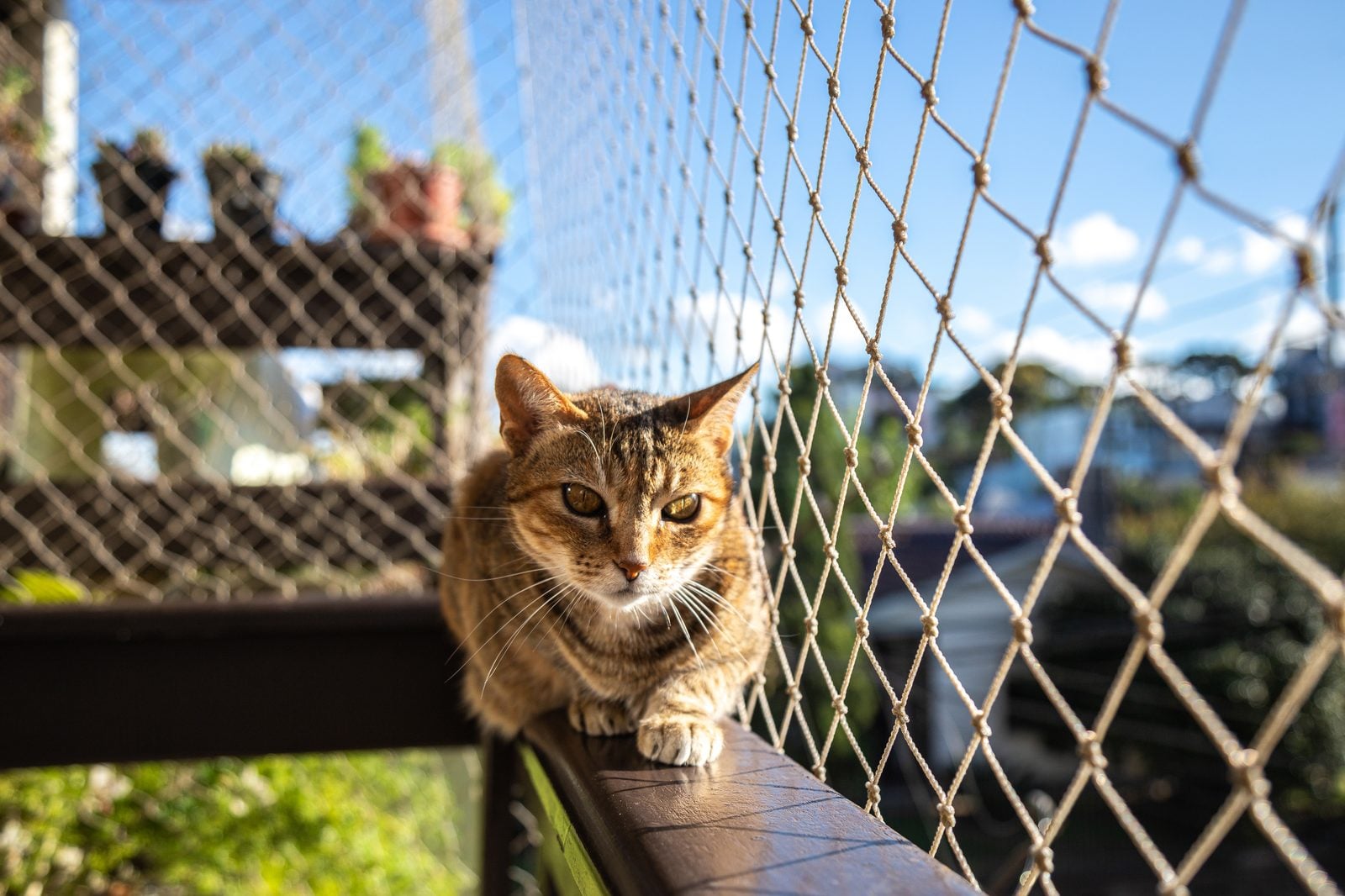
In a high-rise the balcony is the main risk. Check three things during the viewing. The height of the railing against how high your animal can actually jump, the gaps between the balusters and the gap under the rail, and how hot the floor surface gets in the afternoon, because that lands directly on paws.
If you plan to fit safety netting, ask the management office before you pay anything. Balcony railings and the external facade are common property. Many buildings specify the colour and the fixing method, and some do not allow drilling at all. Knowing the answer before you sign is what tells you whether a unit genuinely works.
Unit size against the number of animals the ordinance allows
The Bangkok ordinance ties the number of animals to the size of the home. For condominium units the stated thresholds are one dog or cat for units of 20 to 80 square metres, and two for units above 80 square metres.
For anyone with two animals this changes how unit size should be read. The 80 square metre line sits well above a typical one-bedroom and above a fair number of two-bedroom units as well. If you have two animals and you are looking at a 60 square metre unit, raise this with the management office before the booking deposit rather than after the move.
Further reading on setting up a condo for a cat
If your animal is a cat, the preparation differs from a dog in ways worth reading separately, covering window and balcony security, vertical space, and where a litter tray goes in a compact layout. We keep a dedicated guide on keeping a cat in a condo that covers this in full.
Which districts have the most pet-friendly supply?
This is the finding most searchers in this group should see first. Pet-friendly supply does not spread evenly across Bangkok in proportion to district size. It clusters. The figures below were pulled from the PropertyScout platform on 14 August 2026 and are starting prices, not averages.
| Area | What the pet friendly pool looks like |
|---|---|
| Watthana district | The deepest pet friendly pool in the city and the usual first stop |
| Phrom Phong | A core Sukhumvit pocket inside Watthana with the lowest entry rent among the districts listed here |
| Phra Khanong Nuea | A smaller pool a few stops further out along Sukhumvit |
| Sathon | The thinnest pool on this list, so options come and go quickly |
| Bangkok overall | The citywide baseline the district level pools are measured against |
This is the finding most searchers in this group should see first. Pet-friendly supply does not spread evenly across Bangkok in proportion to district size. It clusters. The figures below were pulled from the PropertyScout platform and are starting prices, not averages.
The decision this supports is straightforward. If you work near Sathon and you have a pet, widening the search eastward along Sukhumvit does far more for your shortlist than waiting for something to appear locally. In an area with very little supply you are not in a position to negotiate on price, you are competing for the few units that exist.
How much extra does a pet clause cost by unit size?
The obvious follow-up question is how much a pet clause costs. There is no single number, because the premium widens with unit size, the same mechanism we see with floor level and walking distance to a station.
| Comparison level | Premium |
|---|---|
| Whole market, condos for rent across Bangkok | About 25 percent higher |
| One-bedroom level across Bangkok | About 25 percent higher |
| Two-bedroom level in Sukhumvit | About 83 percent higher |
For budgeting, the conclusion is that a larger unit in a central location with a pet clause is not a matter of a few thousand baht a month. It is a five-figure difference. Moving one or two stations out does more for the budget than shrinking the unit in the same location, which matches what we found when comparing two-bedroom supply across areas.
One caution on the figures. Every number shown on a hub page is a starting price rather than an average, and it changes daily. Open the live page again on the day you decide.
What two extra points apply only to foreign renters and buyers?
Foreign tenants carry a document requirement that Thai tenants often do not notice. Pet registration under the city ordinance calls for written consent from the unit owner where the keeper is a tenant, and that sits alongside the lease and, separately, alongside the owner's own TM30 obligation to notify immigration of a foreign occupant. Ask for the consent letter and the lease in the same conversation. Chasing an absent owner for a signature after move-in is far harder than getting it before.
For foreign buyers there is a point that works in your favour for once. Pet bylaws are amended by resolution of the general meeting of co-owners, and only owners vote there. A foreign buyer holding a unit freehold within the 49 percent foreign ownership quota has a voice in that room. A foreign occupant on a long lease does not. If the pet rules are the reason you are buying rather than renting, confirm the unit is freehold and inside the quota rather than leasehold, because the two look similar in a listing and differ entirely on this point.
Frequently asked questions about pet-friendly condos
Where are the pet-friendly condos in Bangkok
The heaviest concentration of pet-friendly condos in Bangkok is in Watthana district, followed by Phrom Phong and Phra Khanong Nuea. The practical route is to open the pet-friendly hub page on the PropertyScout platform and narrow by district and budget from there.
How much more does a pet-friendly condo cost to rent
At the entry level of the market, pet-friendly units sit about 25 percent above Bangkok condo rentals generally. The gap widens with size. For two-bedroom units in Sukhumvit, pet-friendly listings run about 83 percent above Sukhumvit two-bedrooms generally. All of these comparisons use entry points rather than averages.
How many pets does the law allow in a Bangkok condo
The Bangkok Metropolitan Administration ordinance on the keeping and release of animals sets a ceiling by home size. For condominium units of 20 to 80 square metres the stated limit is one dog or cat, and for units above 80 square metres it is two. A building's own bylaws may set stricter terms, and in practice those bylaws are what governs residents.
When do pets have to be registered and microchipped
The ordinance requires dogs and cats to be microchipped and registered within 120 days of birth, or within 30 days of arriving in Bangkok. Supporting documents include identification, house registration, proof of rabies vaccination, and written consent from the unit owner where the keeper is a tenant. Sources currently disagree on the commencement date, giving either 10 January 2026 or 10 January 2027, so confirm with the district office covering your building before acting.
Is there an extra deposit for keeping a pet
Many buildings charge one on top of the standard security deposit. A Bangkok building roundup published on 21 April 2026 reports a range of roughly THB 5,000 to THB 20,000 depending on the building and the size of the animal. Ask for the exact figure and the return conditions before you place a booking deposit, and get both written into the agreement rather than agreed verbally.
Is it better to rent or buy a pet-friendly condo
The real difference is the type of risk rather than the size of the sum. Renting carries the risk that the bylaws or the owner's position change at renewal, in exchange for being able to move quickly. Buying carries the risk that the bylaws are amended by a later resolution of the general meeting, in exchange for holding a vote in that meeting. We compare the two paths in detail in a separate guide.
Summary
The pet-friendly segment of the Bangkok condo market is considerably smaller than most people assume, at roughly 2.6 percent of rental listings and 2.8 percent of sale listings, and what exists is not spread evenly. Watthana district holds more than a third of it. Together those two facts mean that finding a home in this group starts with a willingness to move the map, rather than waiting for something to surface in the area you first had in mind.
Three things you can do today. Write down your animal's adult weight and how many you have before you start looking. Filter by the animal conditions before you filter by budget. Ask for the pet section of the building bylaws in writing before you pay anything. Those three steps remove almost every problem that pet owners in Bangkok condos run into.
When you are ready, browse verified listings on the PropertyScout pet-friendly hub pages for both rentals and sales. If you would rather have someone put the conditions to the management office on your behalf, our property consultants can do that, and the service is free for buyers and tenants.
Prices and availability are subject to change and are not guaranteed. Property information is general guidance only. This content is not legal, tax, or financial advice. For the Bangkok Metropolitan Administration ordinance and for any building's bylaws, confirm with the relevant district office and with that building's juristic person before making a decision.
FAQs
Lorem ipsum dolor sit amet, consectetur adipiscing elit. Suspendisse varius enim in eros elementum tristique.

Explore More Topics
Free real estate resources and tips on how to capitalise